


- 01
Too Real or Too Much? Why Kajol and Twinkle’s Talk Show Has Divided the Internet ?
Too Real or Too Much? Why Kajol and Twinkle’s Talk Show Has Divided the Internet ?
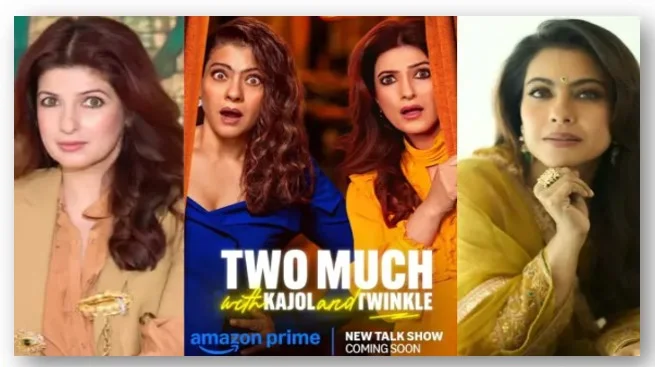
For years, viewers complained that celebrity talk shows felt rehearsed, safe, and PR-approved, but with Two Much With Kajol and Twinkle, Indian talk shows may have crossed a line or maybe just created a new one. From memes to think-pieces, this new Bollywood talk show entered the Indian pop culture with instant velocity.
While the first reactions reveal a clear divide: fans applaud the honesty and female-led energy, and critics argue the conversations feel overcrowded and unfocused. See, Two Much with Kajol & Twinkle arrived loudly marketed as the anti–Koffee With Karan, like less polish, more punch and less couch etiquette, more chaos. This wasn’t meant to be another celebrity sofa session. It was positioned as a conversation-first format, where stars talk with the hosts, not perform for them. Unlike Koffee With Karan’s polished gossip-playbook, this show leaned into interruptions, overlapping opinions, and unpredictable energy.
First impressions? Some viewers call it “refreshingly real.”Others say it feels overwhelming—like three strong voices fighting for the mic. Either way, it’s not being ignored.
When dislikes still count as demand
Viewership vs. backlash is nothing but a curious case of “hate-watching” success. This is a classic case where Two Much with Kajol & Twinkle has cracked a modern streaming paradox, which is that people may not love it, but they’re definitely watching it.
As a result of this, the viewers are divided into two loud camps:
- Those who call it a refreshing disruption of celebrity politeness
- Those who dismiss it as performative and unnecessary
Yet both camps are watching; strong reported viewership contrasts sharply with intense online criticism. Many viewers admit they tuned in purely to participate in the discourse. See, some praise its bold, female-led energy. Others see it as noise over nuance . But legacy isn’t always built on love. Sometimes, it’s built on impact. The real question isn’t whether people agree with the show but whether Indian audiences are now more drawn to provocative formats than polite conversations.
What does this mean for the show’s legacy? In today’s attention economy, polarisation isn’t a problem; it’s a strategy. Visibility often matters more than validation.
Read also:
- Missed It in Theatres? Thamma Is Coming to OTT After Massive Run
- Ramayana Goes Global: 3D Teaser to Debut with Avatar: Fire and Ash
- More Than a Film Moment: Sunny Deol’s Emotional Border 2 Teaser Launch
When “unfiltered” turns uncomfortable
Fairly, it was not the format that exploded online; rather, it was the moments that refused to stay contained. Comments around infidelity, marriage having an “expiry date,” and how relationships change with generations instantly escaped the episode and landed straight on Twitter timelines.
That honesty worked for some. For others, it felt too casual for topics that still hurt very real people. The reactions weren’t just about offence, they were about tone. That’s why these clips landed differently. Viewers weren’t reacting as fans; they were reacting as partners, spouses, and survivors of messy relationships. When marriage was framed as something that can “expire,” many didn’t hear realism—they heard dismissal.
Does calling something “real” excuse how it lands? And in a country where marriage is still deeply personal, can celebrity honesty ever be neutral? So was the problem what was said…or the way social media chopped it up and served it raw?
Two strong voices, one very crowded couch
No one’s questioning Kajol or Twinkle individually. That’s not the debate. There’s definitely chemistry between Kajol and Twinkle, but chemistry doesn’t always mean harmony. Individually, both styles work. Together, some viewers feel the rhythm never quite settles. The result? Conversations that spike, dip, and occasionally stall, leaving guests unsure where to jump in.
See, talk shows usually thrive on listening, letting moments land, and giving guests room to surprise, but Two Much often fills every silence. The constant chatter may be intentional, but for some viewers, it translates as discomfort rather than momentum.
So the real question becomes, is this disjointed energy a flaw or just a phase? Guests occasionally struggle to finish a thought before the next interruption lands. That’s where the criticism sharpens: is the show about conversations with celebrities or conversations around them?
So…are we watching or hate-watching?
That’s the question lurking behind every tweet. If social media is the jury, the verdict on Two Much with Kajol & Twinkle is anything but unanimous. Some users praise the show for being different, messy, and real. Others say it feels forced, noisy, and oddly stressful to watch. A recurring sentiment?
Positive reactions call the show bold, unapologetic, and refreshingly chaotic. Critics call it “try-hard,” “cringe,” and “too much energy for one couch.” Either way, the noise hasn’t died down. And as long as the comments keep coming, the show stays relevant, liked or not. Viewers want honesty but not at the cost of comfort. They want chaos but with control. They want relatability but without second-hand embarrassment.
That contradiction says everything. The show thrives in an era where attention matters more than affection. Likes, dislikes, retweets, and rants all feed the same machine. And right now, Two Much is winning that game.
Not quietly loved but loudly discussed
Nothing about Two Much feels accidental. The loud opinions.The chaotic energy. The discomfort. The mix of strong views, divided audiences, criticism, and curiosity places it in a strange middle ground: not refined enough to be iconic, not forgettable enough to fade.
But if it’s measured in warmth, trust, and rewatch value? That’s still up for debate. The show reflects where Indian pop culture is right now—loud, opinionated, impatient, and always online.
Whether it evolves into something sharper or collapses under its own noise will decide if it’s remembered as India’s most polarising talk show… or just a very loud moment in time.
I craft sharp reels, video reviews,technology updates, latest developments and trend analyses,known for deep research, clear insights, and compelling sforytelling across the latest in film and pop culture.