


- 01
Dhruv Rathee’s Truth-Bomb Video That Left the Internet Asking One Question: Reality of Delhi Red Fort Blast?
Dhruv Rathee’s Truth-Bomb Video That Left the Internet Asking One Question: Reality of Delhi Red Fort Blast?
 Saniya MehtaYouTube, Strategies, Analytics, Influencers, Influencers Biography, Popular Influencers, Trends
When a YouTuber Turns Into the Country’s Unofficial Investigator
Dhruv Rathee isn’t just a creator anymore. He’s India’s most-watched explainer, myth-breaker, and sometimes, the accidental opposition party. With 30.4 million subscribers, his videos don’t just trend, they disrupt. They force conversations at dining tables, chai stalls, coworking spaces, and Parliament corridors. So when he dropped the video titled “Delhi Red Fort Blast: The Truth”, the internet didn’t click.
It braced.
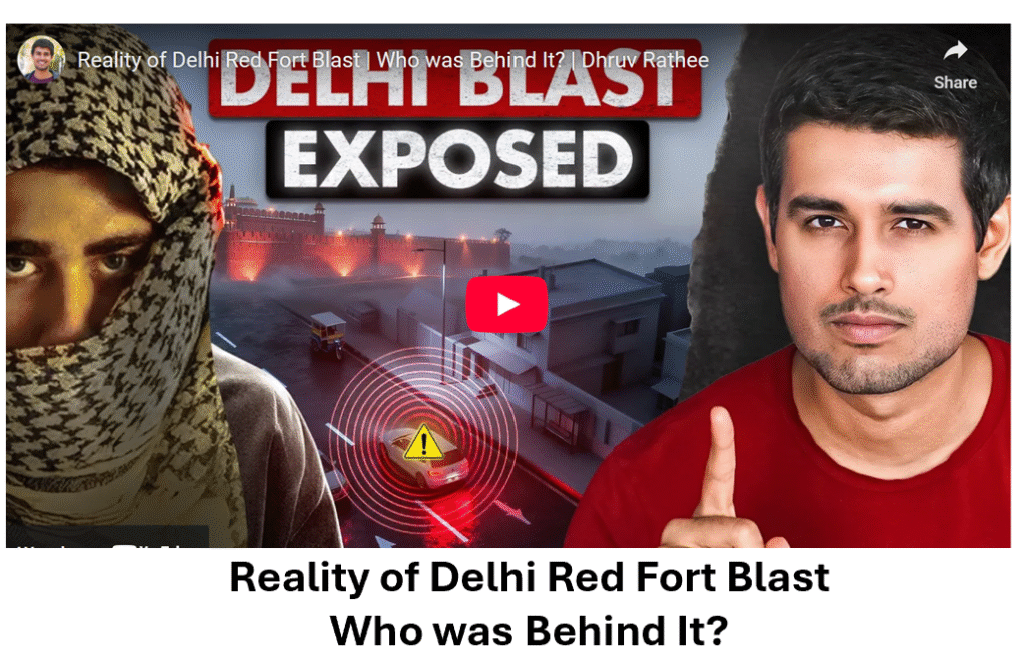
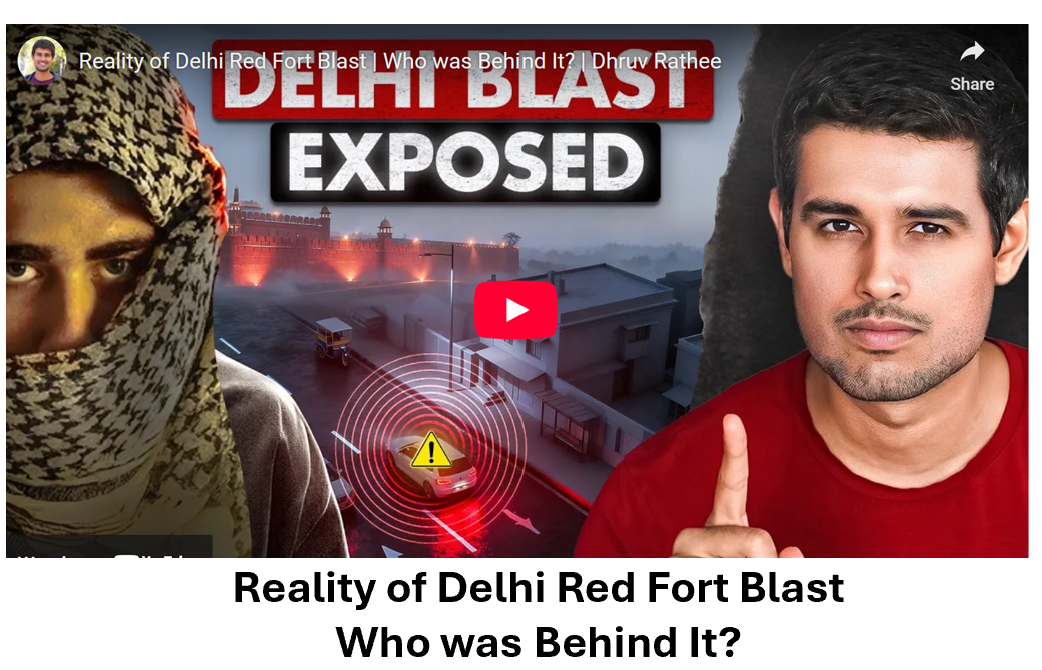
The thumbnail was pure Rathee energy, a fiery frame, a blurred explosion, a hint of accusation, and Dhruv staring dead into the camera with that “listen carefully” expression. Before the play button was even hit, two things were clear:
- He wasn’t going to soften the angle.
- Someone was about to get uncomfortable.
The Blast That Shocked the Nation, Explained Like a Crime Thriller
The video opens with imagery most Indians know but rarely rewatch, smoke clouding the air above the Red Fort, sirens, crowds scattering, that sterile news tone repeating the same two lines. But Rathee doesn’t linger. He pivots sharply, pulling viewers into a timeline that moves faster than the broadcast channels managed that day.
In classic Dhruv style, he walks through the facts like a man rearranging puzzle pieces under a spotlight. His narration never cracks. His pacing never shakes. His argument never wanders. He speaks like someone who has rehearsed this a hundred times in his head, because he has. He knows the stakes.
He then drops the line that ignites the entire video’s momentum:
“A blast doesn’t happen in isolation; it happens because someone wants it to happen.”
And just like that, the shift happens.
From tragedy to motive.
From motive to politics.
From politics to accountability.
It’s the Rathee formula, uncomfortable, unavoidable, and impossible to predict.
Also Read: When a Hindu Sanyasi Went to a Muslim Masjid
Why the Video Hit Harder Than Other News Reports
Television channels blasted a name.
Dhruv Rathee gave it a narrative.
While traditional media stuck to safe phrasing and official statements, Dhruv went into the messy corners that most primetime anchors tiptoe around. The intelligence lapses. The conflicting reports. The political reactions arrived too quickly. The names are floating in digital whispers, but not in official press conferences.
He doesn’t accuse anyone directly; he doesn’t need to.
He simply asks the kind of questions the public is already thinking.
In a country where clarity feels like a rare luxury, Rathee’s piercing articulation becomes its own event.
The comment section reads like a national moodboard:
“This man explains in 20 minutes what the government won’t say in 20 years.”
“Dhruv is doing journalism better than journalists.”
“I didn’t know this much information even after watching hours of news.”
The video is viral not because it’s sensational, but because it feels complete, a word people don’t associate with news anymore.
Who Is Dhruv Rathee Really Calling Out?
The brilliance of the video is that Rathee never names a single perpetrator. He doesn’t point to individuals, but to broken systems. The lapses in security.
The bureaucratic delays.
The political reactions felt more like PR than leadership.
The way narratives shift before facts stabilize.
He positions the question not as “Who planted the bomb?”
but
“Who benefits from the chaos?”
It’s investigative storytelling disguised as a YouTube video, and it hits harder because of that disguise.
The Man Behind the Camera: A Quick Biography of the Internet’s Most Fearless Voice
Dhruv Rathee, originally from Haryana, grew up far from the newsrooms he now challenges. He holds a background in renewable energy engineering and economics, not journalism, which might explain why his videos are built like research papers and delivered like TED Talks.
He lives between India and Germany, balancing a quiet personal life with one of the loudest digital platforms in the country. He rarely reveals family details, avoids personal controversies, and prefers to let his work create the noise.
Today, he is 29, but his influence stretches far beyond his age group. Students trust him. Families quote him. Political groups fear him. And governments, well, they watch him.
A Nation Split Between Appreciation and Anxiety
Predictably, the reactions were polarizing.
Supporters praised him for asking the questions no one else dared to.
Critics accused him of oversimplifying a complex tragedy.
Political trolls flooded the comments within hours.
But that’s the Rathee effect: a video that becomes a conversation, a conversation that becomes a debate, a debate that becomes a movement.
By the 24-hour mark, the Red Fort blast wasn’t just a headline anymore.
It was a phenomenon reawakened.
The Truth Isn’t Trending. It’s Terrifying
Dhruv Rathee didn’t solve the Red Fort blast.
He did something more powerful.
He made it impossible to ignore.
He turned a tragic news clip into a national mirror.
He forced people to look.
To think.
To question.
And in a country where asking “Why?” can still be dangerous, Dhruv Rathee reminded millions that the truth isn’t always hidden.
Sometimes, it’s simply waiting for someone brave enough to say it out loud.
Video Credit:
I craft sharp reels, video reviews,technology updates, latest developments and trend analyses,known for deep research, clear insights, and compelling sforytelling across the latest in film and pop culture.